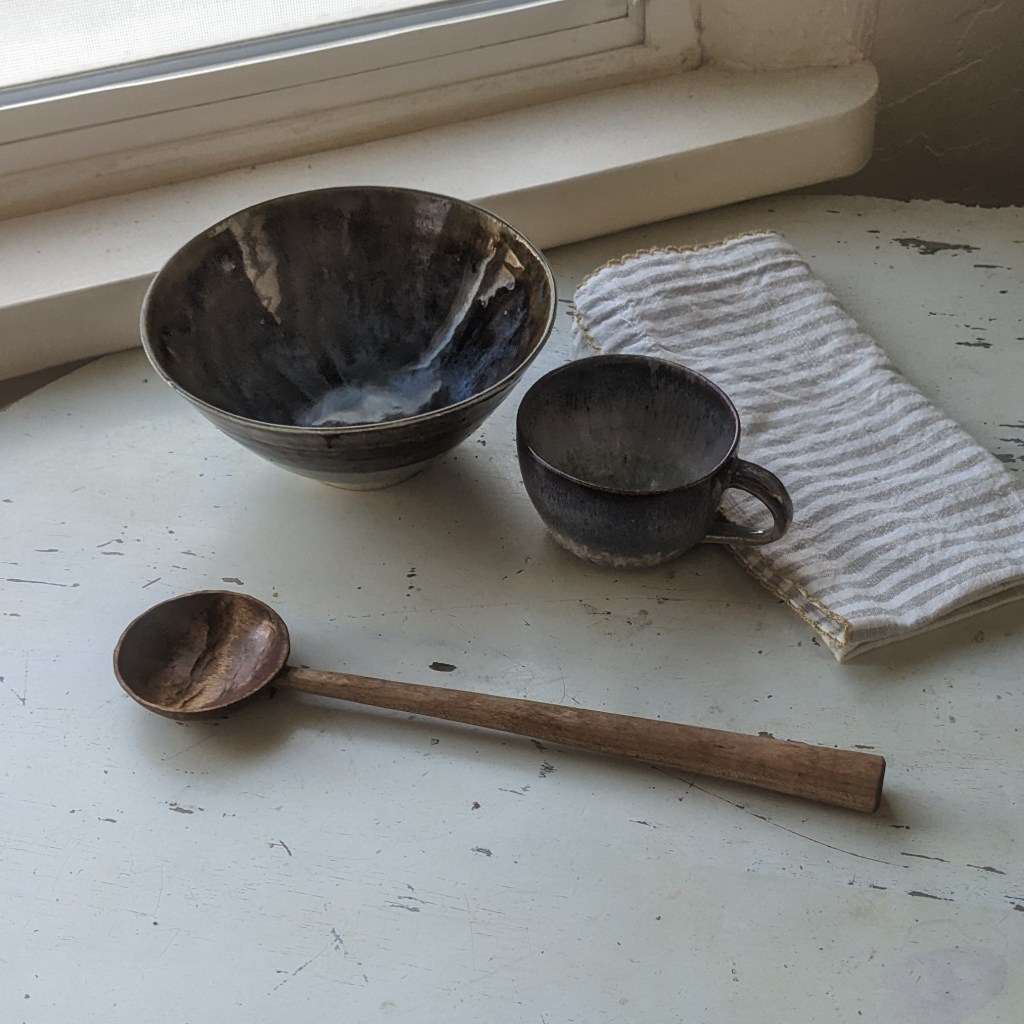
It’s been a long time since I carved a spoon.
This spoon was a first for me in a few areas. It’s the first spoon I’ve carved from maple. It’s the first time I’ve carved a spoon since becoming a professional carver. It’s also the first time I’ve used mostly carving gouges throughout the spoon carving process.
Most of the spoons I made in the past were either oak or walnut. While maple is significantly harder than either of these, I do think it is a good material for a kitchen spoon. After several years of use, I’ve noticed that my old oak spoons have seen a lot of wear, especially where the open grain meets the edge of the scoop. While walnut is closed grain and therefore doesn’t have this issue, it is noticeably softer. I’m always afraid to dent the stem by banging the spoon on the edge of a pan. But with maple I believe I can avoid both of these issues.
Maple is a common material used in the spoon carving community. But it is mostly used while it is still green. Carving this dry maple was quite the workout, even when using a mallet.
Process
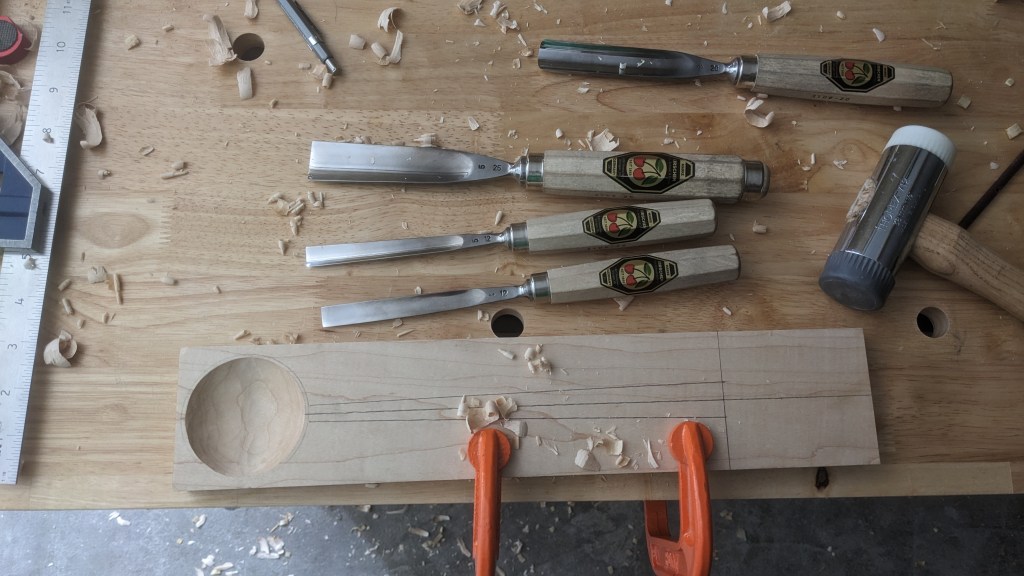
I carved the inside of the scoop using a few different gouges. My intent was to do the roughing out with my #8x20mm gouge, and then smooth the surface with my #5×25 gouge. When I started smoothing, however, I realized that I went a little too deep with my #8 in a few spots and couldn’t always fit the #5×25 within the curvature of the scoop. So I also used a #4x12mm and #5x12mm to finish smoothing out the inside of the scoop.
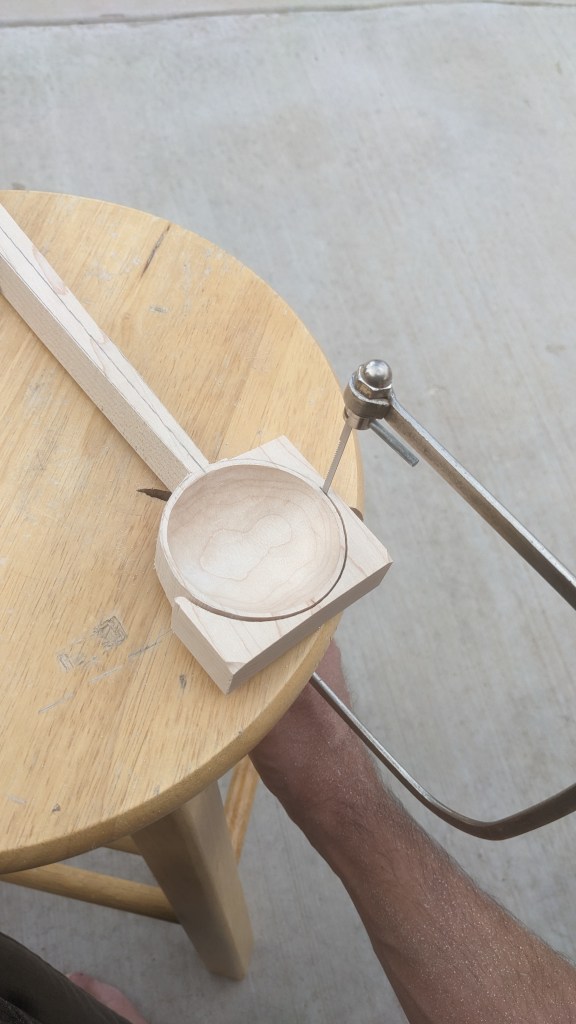
I cut the outline of the spoon from the stock material using my ryoba saw and the coping saw that belonged to my grandfather. Coping the round part was pretty tiring, and I was surprised when I checked the time and saw that it only took me 25 minutes to cut the circle.
As always, I forgot to take any more progress photos after this. I used a #5x25mm and #3x25mm to round the outside of the scoop first. I did this so that I still had enough square material to use the vise while carving the scoop. At this point, I as running out of surfaces that I could clamp down, but I secured the spoon with a dog clamp on the scoop long enough to cut the taper with a bench chisel. After this, I paired the rest of the handle with my carving knife.
Roasting the Wood
I have always loved darker woods, so I roasted this spoon in the oven after I finished carving it. Mitch Robertson gives a good discussion of this process here. He roasts his stock in the oven at 360°F for several hours, and notes a consistent color change throughout the stock material. I didn’t have the patience to have something in the oven for that long, especially with summer coming on, so I baked my spoon at 400°F for about 40 minutes, flipping it over about half-way through. The spoon looked pretty grey when I took it out of the oven, but applying tung oil after it cooled brought out these gorgeous dark brown tones.
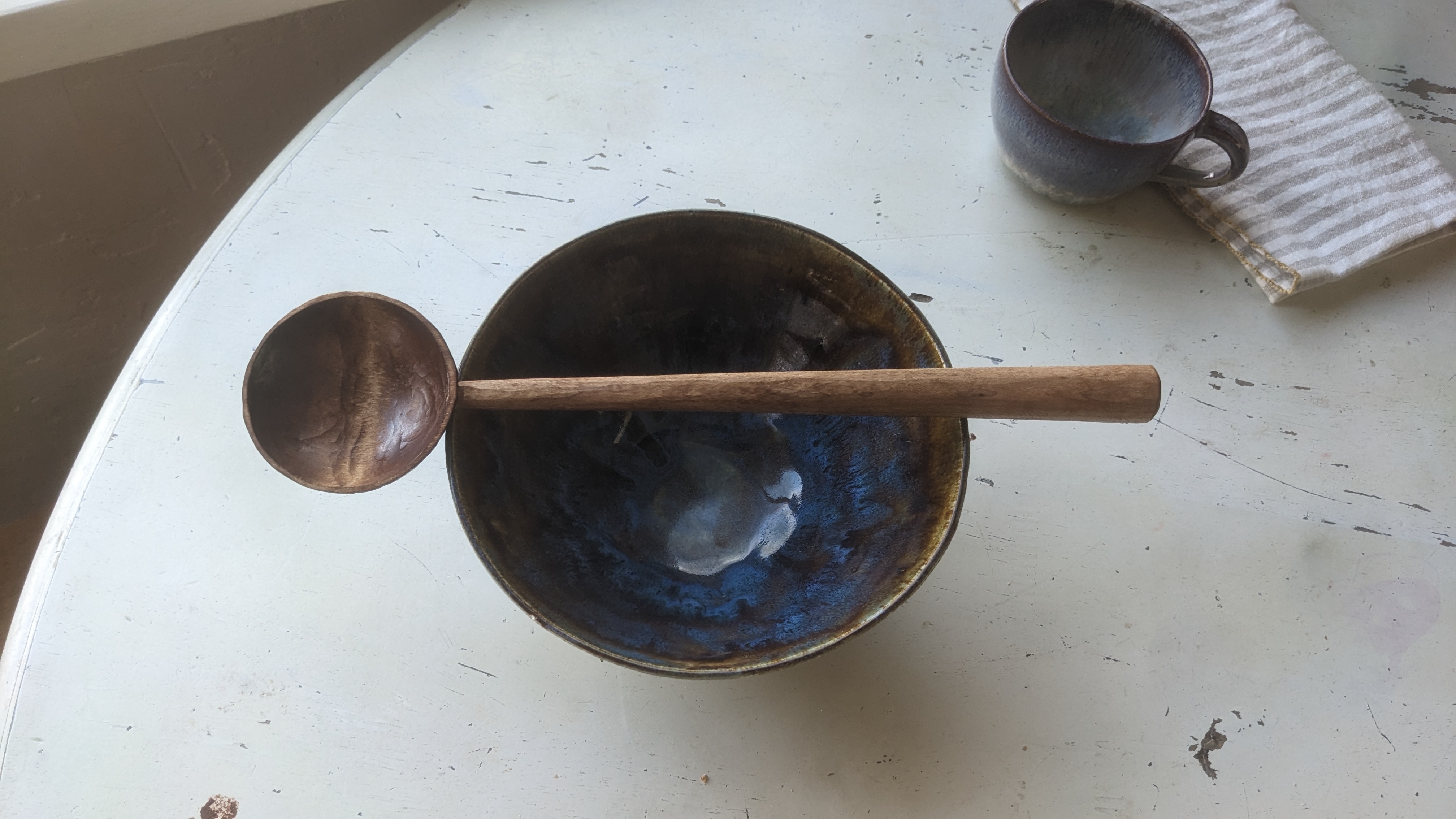
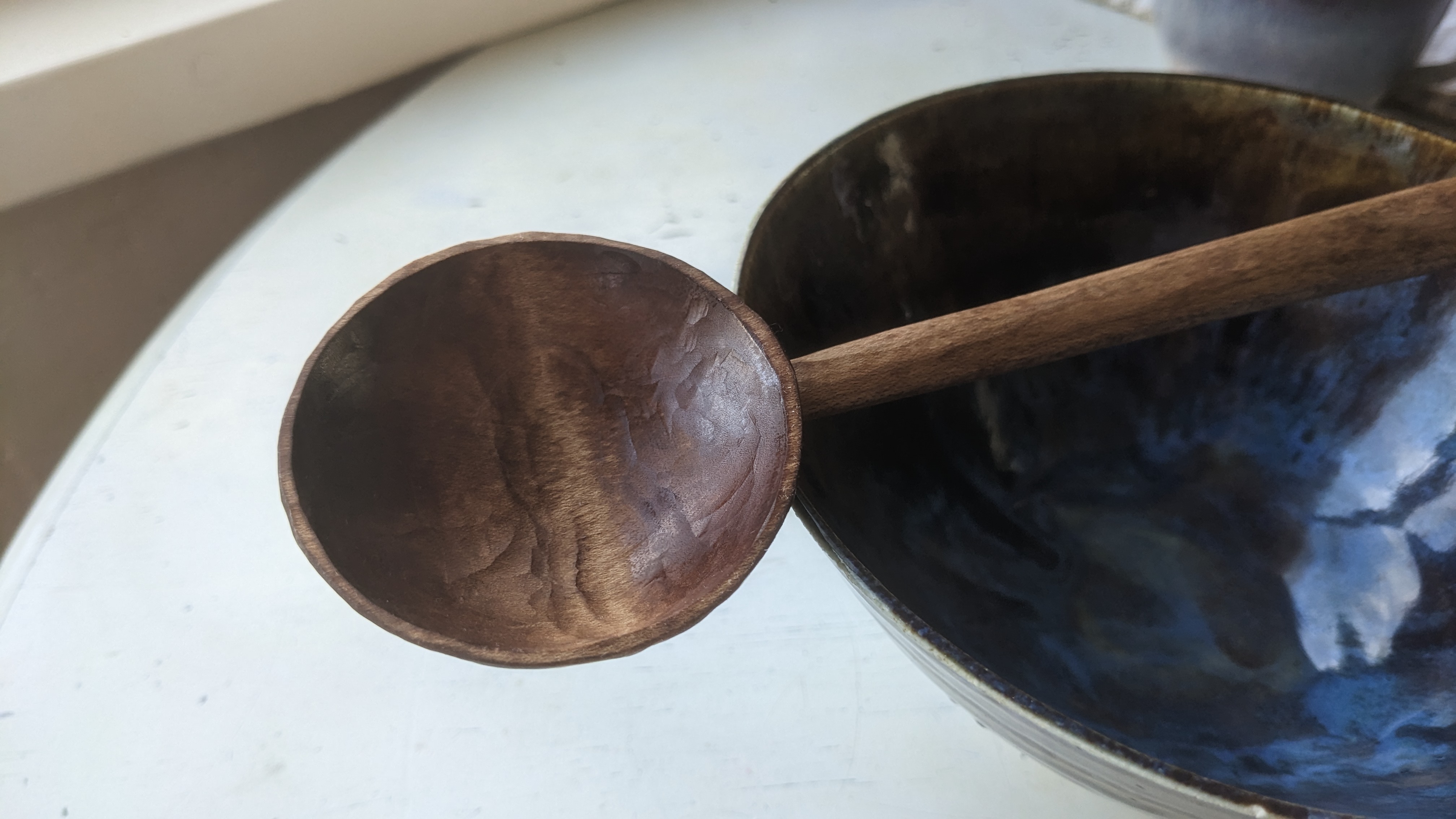
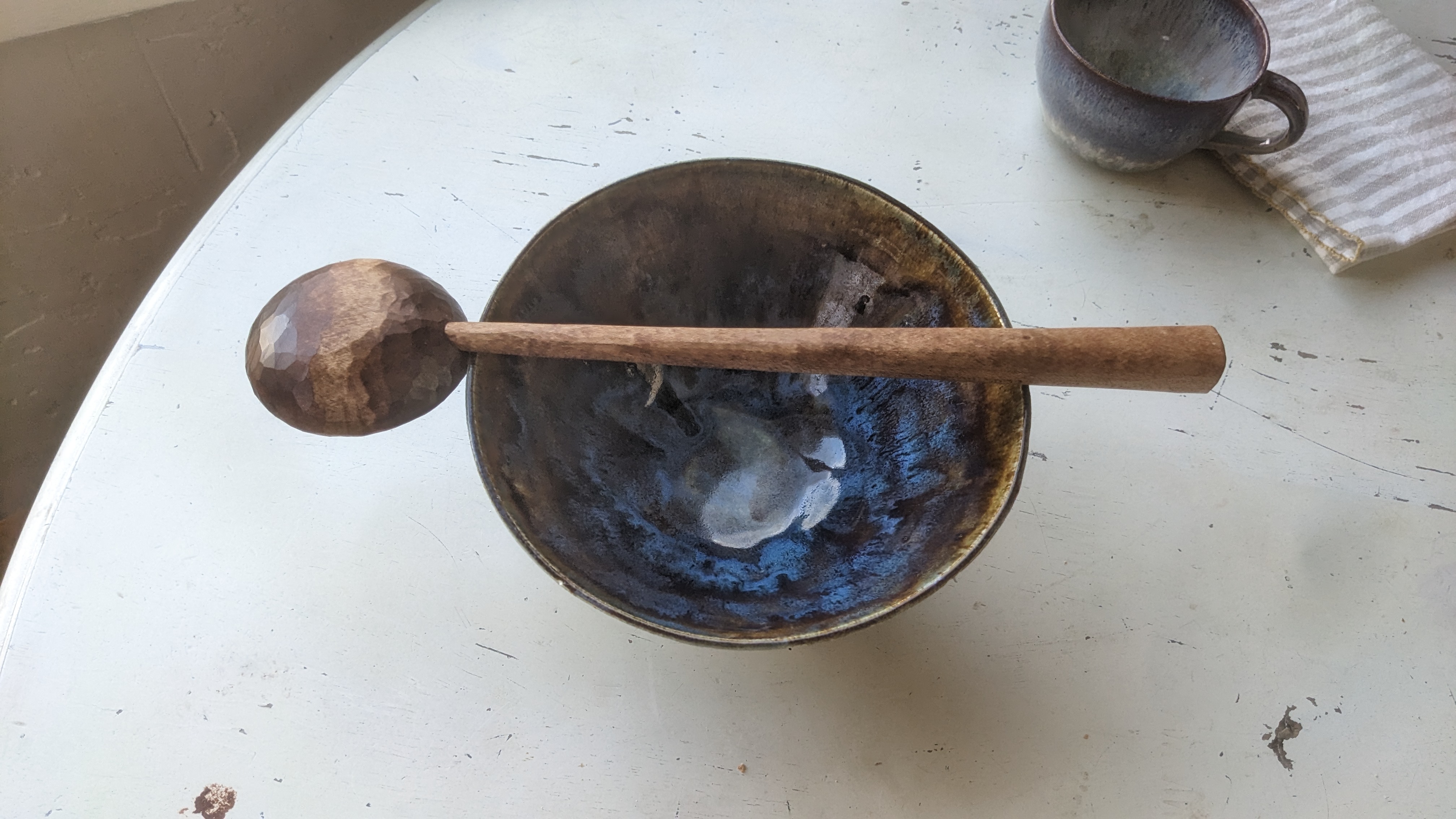
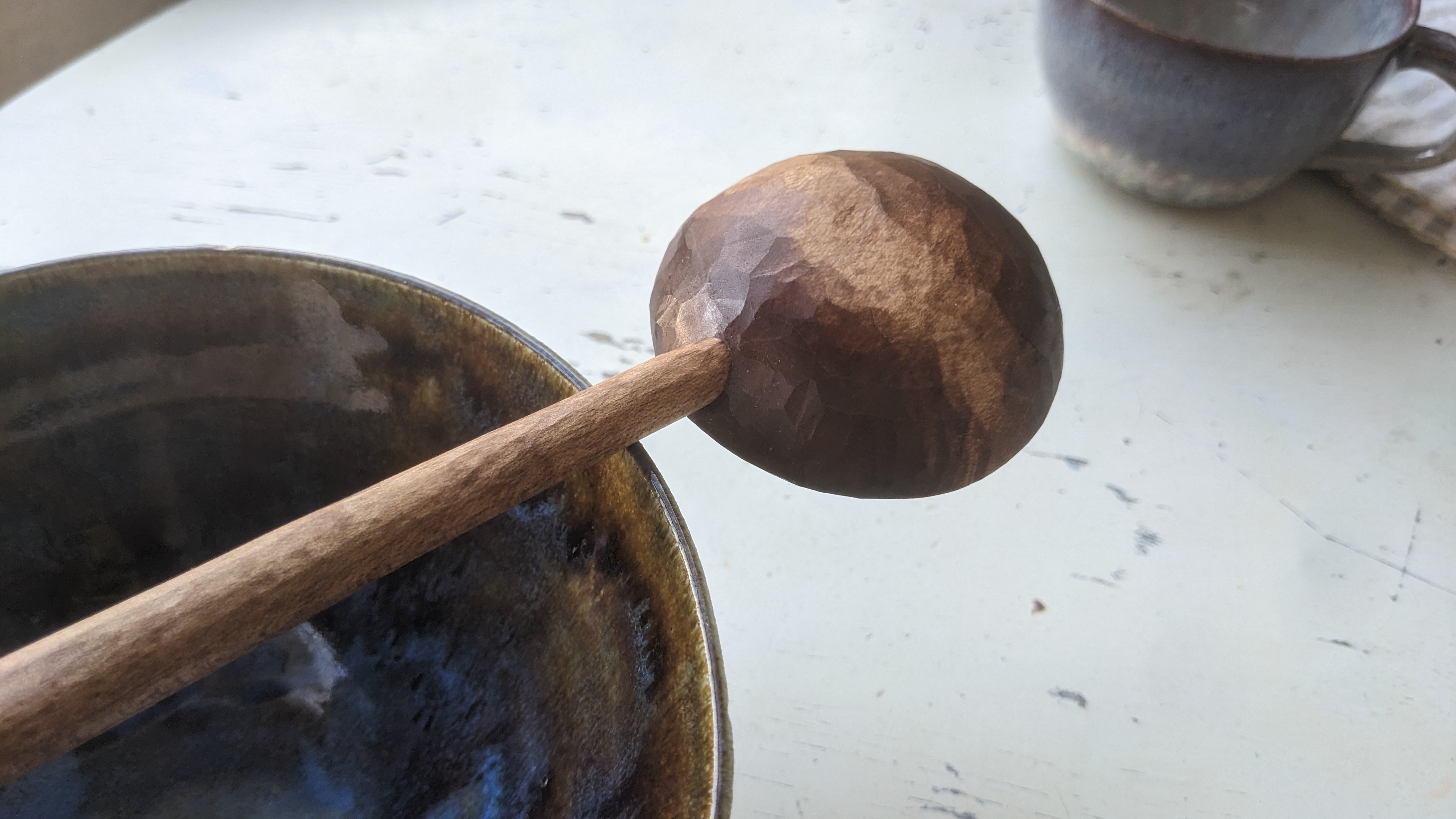
While 400°F does produce faster results than 360°F, it does seem like the coloration is less consistent than it would be with the slower process. As you can see in the pictures, the color change is much more prominent in the end grain than in the face grain. It is also worth noting that Robertson uses this technique to prepare stock before working the material, not after. There’s a chance that roasting a block of wood first, then carving it, would lead to a more consistent color throughout.
Reflection
Anyway, this spoon was a nice reset for me. It’s so easy to get caught up in productivity: carving items for Etsy and trying to do it fast enough to make it worth my time, learning how to run a website and business, trying to get all our new plants in the ground before the summer comes, and let’s not even talk about that pile of dishes that never stops growing.
It was nice going back to my roots in a sense. I can now say that I can carve a spoon twice as fast as I could three years ago. I will also say that it’s still not worth my time trying to sell them for a profit. But it is a satisfying experience making something useful, and making it well, and it was that sense of satisfaction that got all of us into this craft in the first place.